Friday, April 29, 2011

The New York Times and its effects of Online Newspapers

Since the beginning of the year, New York Times articles have been the staple for our blogs. This form of information supply has been overlooked by the general public because it does not present the news in an entertaining way. There is no doubt that the articles supply a wealth of information to the general public with separate opinions, but young people do not have the attention span to read each one. Blogging on the other hand is much more useful, considering that it allows intelligent and mindless information to be presented. Magazines are probably considered the least informative when the categories are usually concerning celebrities and are a distracting pseudo-reality. Taking all of these forms into consideration, the newspapers are the most informative but the least entertaining, while magazines are the opposite. My opinion is that blogging is where enjoyment and intelligence meet and where they can be both appreciated.

Thursday, April 28, 2011

Television's Impact on the Public Opinion

Although a wealth of useful information, television has become a higher form of entertainment than an intellectual source. Between the reality and contestant shows, there aren't many ways that the general public can digest political information. The Daily Show and The Colbert Report do provide current event analysis for young people, although analyzed as extreme leftist and manipulated by the Fox news answer on the O'reilly Factor. If true, O'reilly's presented some scary facts about the young population concerning their knowledge base, but they tried to correlate this with the liberal media impact, which I could not buy. Whether left or right, it is evident that television can be a tool for information or for blind entertainment. On Wednesday's episode of The Daily Show, Stewart discusses how the Royal Wedding has out-shined real news and the effects of the birth certificate release by Obama.

Monday, April 25, 2011

New York Times Co. v. United States (1971)

In 1971, Daniel Ellsberg stole classified information concerning Vietnam, known as the "The Pentagon Papers". He gave them to The New York Times to publish, but the government stopped the printing of the papers and the case was sent to the Supreme Court, under the challenge of the First Amendment right to free speech and press. The government's point was that it could endanger national security. The court issued per curiam, meaning the court gave the verdict as a whole, with separate opinions written (6 concurred, 3 dissented). The per curiam stated that the government had not not carried a "heavy presumption against its constitutional validity". Several justices agreed in their opinions that the press should not be tampered with and that by releasing these papers, that they could not directly cause any imminent danger or harm. Opposing views by other justices provided a good point that the papers could cause increase danger on the battlefield and that there is a question about the limits of the separation of powers. My opinion is leaning more toward a freedom of the press, unless it can be proven with enough evidence that the released information will cause harm to Americans.


The story of Daniel Ellsberg was made into the movie called "The Most Dangerous Man In The World". This provides several opinions and a glimpse of the societal pressures concerning free press and national security

Gitlow v. New York (1925)

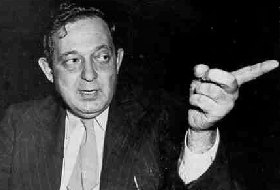
Benjamin Gitlow
A man named Benjamin Gitlow was convicted for violating the New york Criminal Anarchy Act. Criminal anarchy is defined as "the doctrine that organized government should be overthrown by force of violence, or by assassination of the executive head or any of the executive officials of government, or by any unlawful means". His publishings of overthrowing the government, based on the Communist Manifesto, violated this act according to the state of New York. The case was sent to the Supreme Court because First Amendment rights of free speech and press were called into question. The Court ruled 7 to 2 that Gitlow should stay convicted because his work had the potential to create "a clear and present danger...that Congress has a right to prevent". Justice Holmes argued against this, saying that citizens should be given the right to state their opinion, an idea was not being forced upon others, and the minority that accepted the belief was too minor to be taken seriously. My decision in this case would be more split down the middle than the Court had decided. I feel that individuals have the ability to accept an idea and are not so easily persuaded, and if the "clear and present danger" rule applies to society now, that some members of the Tea Party should be reprimanded for causing social damage. I believe that this is more circumstantial than anything, because if a hostile and violent takeover was imminent, then the convictions should stand.
The link provided is an expansion of the views of the Court and the dissenting opinion

Sunday, April 24, 2011

Brown v. Board of Education Topeka, Kansas (1954)

The Brown case helped decide multiple cases that focused around the subject of African-American children not being able to attend segregated, white schools. The case of Sweatt v. Painter (1950) was different from Brown because it involved a singular Texas Law School, that had no alternatives for blacks. Each previous attempt was to overthrow the Plessy v. Ferguson  ruling of "separate, but equal". In a unanimous decision, the court ruled that the plaintiffs are deprived of their rights, given by the Fourteenth Amendment and that segregation in education is unconstitutional. This decision I completely agree with and there is no reason why Plessy's ruling should carry forward in society. Viewing the facts, Brown is a prime example of the Constitution's ability to adapt.


PBS does a great job of highlighting the key characters and the importance of societal viewpoints in the 1950's.

Gideon v Wainwright (1963)

Clarence Gideon. 
A man named Clarence Gideon was arrested for attempted burglary of a pool hall. Free counsel was only afforded to capital crimes so he represented himself. He was found guilty, but he wrote a petition from from jail, saying that the verdict violated his right to a fair trial, based on the fact that he did not have the funding (forma pauperis). It was a unanimous decision from the Supreme Court that anyone convicted of a crime should be afforded a lawyer. Although I think that Gideon deserved his time, it is obvious that counsel is needed in every case, based upon a US citizen's rights.


This video is footage of Clarence Gideon's initial court case. I apologize for the quality


The audio from the Supreme Court case of Gideon v. Wainwright. The justice sums up the importance of their decision and the background of the preceding case.

Miranda v. Arizona (1996)

Ernesto Miranda
Ernesto Miranda was arrested and questioned for kidnap and rape. He was not made aware of his Fifth Amendment right to an attorney or the right to remain silent. After being interrogated, he signed a written confession and was found guilty. The Constitutional argument was that the Fifth Amendment states that no person can be a witness against themselves. Viewing the case, the Supreme Court, in a 5 to 4 decision, decided that Miranda could not be guilty without a doubt because of interrogation methods. Personally, I feel that the system worked correctly in terms of future cases and helped prevent inhumane interrogation methods, but for this case, Miranda should not have been let free from a moral point of view. The important idea to accept is that the Supreme Court is there to uphold the Constitution for all individuals, despite personal views.


An American government teacher breaks down the history of the Miranda case and goes into detail about the Fifth Amendment. The question he presents is whether or not the results of the case hindered or benefited police enforcement.