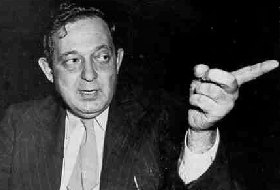
In 1971, Daniel Ellsberg stole classified information concerning Vietnam, known as the "The Pentagon Papers". He gave them to The New York Times to publish, but the government stopped the printing of the papers and the case was sent to the Supreme Court, under the challenge of the First Amendment right to free speech and press. The government's point was that it could endanger national security. The court issued per curiam, meaning the court gave the verdict as a whole, with separate opinions written (6 concurred, 3 dissented). The per curiam stated that the government had not not carried a "heavy presumption against its constitutional validity". Several justices agreed in their opinions that the press should not be tampered with and that by releasing these papers, that they could not directly cause any imminent danger or harm. Opposing views by other justices provided a good point that the papers could cause increase danger on the battlefield and that there is a question about the limits of the separation of powers. My opinion is leaning more toward a freedom of the press, unless it can be proven with enough evidence that the released information will cause harm to Americans.
The story of Daniel Ellsberg was made into the movie called "The Most Dangerous Man In The World". This provides several opinions and a glimpse of the societal pressures concerning free press and national security
Showing posts with label court cases. Show all posts
Monday, April 25, 2011
Gitlow v. New York (1925)
| Benjamin Gitlow |
The link provided is an expansion of the views of the Court and the dissenting opinion
Sunday, April 24, 2011
Brown v. Board of Education Topeka, Kansas (1954)
The Brown case helped decide multiple cases that focused around the subject of African-American children not being able to attend segregated, white schools. The case of Sweatt v. Painter (1950) was different from Brown because it involved a singular Texas Law School, that had no alternatives for blacks. Each previous attempt was to overthrow the Plessy v. Ferguson ruling of "separate, but equal". In a unanimous decision, the court ruled that the plaintiffs are deprived of their rights, given by the Fourteenth Amendment and that segregation in education is unconstitutional. This decision I completely agree with and there is no reason why Plessy's ruling should carry forward in society. Viewing the facts, Brown is a prime example of the Constitution's ability to adapt.
PBS does a great job of highlighting the key characters and the importance of societal viewpoints in the 1950's.
Gideon v Wainwright (1963)
| Clarence Gideon. |
This video is footage of Clarence Gideon's initial court case. I apologize for the quality
The audio from the Supreme Court case of Gideon v. Wainwright. The justice sums up the importance of their decision and the background of the preceding case.
Miranda v. Arizona (1996)
| Ernesto Miranda |
An American government teacher breaks down the history of the Miranda case and goes into detail about the Fifth Amendment. The question he presents is whether or not the results of the case hindered or benefited police enforcement.
Saturday, April 23, 2011
Regents of the University of California v. Bakke (1978)
| Allan Bakke |
This link allows further information on the effects of Regents of the University of California v. Bakke (1978)
Miller v. California (1973)
| Chief Justice Warren Burger |
This link describes the entirety of the case with all the technical clauses and facts.
Plessy v. Ferguson (1896)
The case of Plessy v. Ferguson ended with the result of separate but equal accommodations for blacks and whites. Justice Brown felt that the underlying fallacy of segregation laws were that they implied that one race is inferior to the other. Votes tallied at 7 to 1 in favor of separate but equal, placing Justice John Harlan as the hero against the odds. Seeing the decision, I believe that this was a case where the decision was completely backward. There is only so much that can be blamed on societal expectations, so the need for a conservation of Constitutional rights trumps party affiliation or personal agendas.
Gary Orfield discusses Plessy v Ferguson, separate but equal rights, all deliberate speed, and that 'equality' is subjective.
Tuesday, April 19, 2011
United States v. Nixon (1974)
In the Supreme Court case United States v. Nixon, the court ruled that President Nixon must deliver the tapes he had recorded in the oval office as evidence. The constitutional issue was whether or not Nixon had the right, under the duty of President, to deny the court. The ruling was that he could not deny the court and that he must agree to the subpoena. Instead of delivering the tapes, Nixon decided to step down as president. My opinion is that the president is not above the law, especially if he/she is under investigation for something unlawful.An instance where executive privilege might be used would be if the information that would be revealed, would jeopardize the lives of Americans, domestic or foreign.
This is a video of Nixon's speech before his resignation. Ultimately, Nixon's last act was one of rebellion against the court and the political process.
Roe v. Wade breakdown (1973)
The background for the Roe v. Wade entailed the woman by the name Jane Roe, who wanted an abortion because she would not be able to support the child to her best ability. The state of Texas would not allow the abortion, so the case went to the Supreme Court because it was a violation of privacy. Privacy, in this case, entails her personal beliefs, not the state's, and her enumerated rights that are given by the 9th amendmentThe state's argument was that the fetus was protected under the 14th amendment. My personal belief is that the Supreme Court ruled correctly in this case. Growing up in a Christian home, I would have previously said that there are some religious obligations, but every individual woman's beliefs are not the same. Therefore, there can be no blanket response concerning morals. The Supreme Court ruled in interest of the mother, child, and birthing doctors. It is not only if the baby or mother's life is in jeopardy, but if the environment in which the child is raised is psychologically, economically, or physically unacceptable, than the reasons are substantial.
This video is an extreme example of why women should have the right to choose and how separation of religious views are important. I'm not condoning the sentiments expressed by the father, but I can see where he's coming from.
Subscribe to:
Posts (Atom)